In British English, a purse is a small money container similar to a wallet, but typically used by women and including a compartment for coins, with a handbag being considerably larger; indeed, a purse is often kept in a handbag.
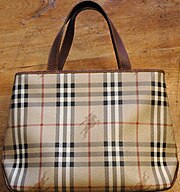
A purse or handbag is often fashionably designed, and is used to hold items such as wallet, keys, tissues, makeup, a hairbrush, cellular device or personal digital assistant, feminine products, or other items.
The first appearance of a bag is on Egyptian hieroglyphics, which show pouches worn around the waist. The next appearance is in 14th century Europe. In Europe they often showed social status based on the embroidery and quality of the bag. At this time the purses were for women mainly and were therefore attached to their girdle.
In the 15th century, both men and women wore purses. They were often finely embroidered or ornamented with gold. It was also customary for men to give their new brides purses embroidered with an illustration of a love story. Later in the century, women, now wearing finer dresses, preferred to wear their pouches under their skirts.
The first appearance of a bag is on Egyptian hieroglyphics, which show pouches worn around the waist. The next appearance is in 14th century Europe. In Europe they often showed social status based on the embroidery and quality of the bag. At this time the purses were for women mainly and were therefore attached to their girdle.
In the 15th century, both men and women wore purses. They were often finely embroidered or ornamented with gold. It was also customary for men to give their new brides purses embroidered with an illustration of a love story. Later in the century, women, now wearing finer dresses, preferred to wear their pouches under their skirts.

In the 16th century, handbags were made out of common materials. They were leather and fastened with drawstring on top. Large cloth bags were introduced and worn by travelers diagonally across the body.
In the 17th century, bags became more complex and elaborate. Girls were taught skills such as embroidery and needlework, that could assist them in finding a husband. These skills gave rise to stitched artwork on purses. Around the year 1670, men's breeches were made with built-in pockets, which caused them to stop carrying purses. They did however carry little netted purses in their pocket to carry money.
In the 18th century, as neo-classical clothing came into fashion, women started carrying their handbags as not to ruin their outfits. They named these bags reticules. Most women had more than one, so that they could use a certain one for each occasion. Contents of these bags might include rouge, face powder, a fan, a scent bottle, visiting cards, a card case, and smelling salts.
In the early 1900s people began calling their bags "handbags". This term referred to luggage that men carried. They then inspired women, who began carrying bags with complicated fasteners, internal compartments, and locks. In the 1920s, it became popular that bags no longer had to match your outfit. In the 1940s, with WWII, women's purses were made out of wood or plastic since metal was being saved for supplies. In the 1950s, popular handbag designers included Chanel, Louis Vuitton, and Hermes. Today these three brands are still popular, along with Gucci, Christian Dior, Fendi, Prada, and Kate Spade, among many others.

没有评论:
发表评论